Children’s Comprehensive Eye Exams
It’s often said that up to 80% of learning is visual—which is why clear, comfortable vision and healthy eyes are essential for school success, sports, and everyday life. Our pediatric-friendly exams check how your child sees, how their eyes team and focus, and how their eyes are developing.
Why a Comprehensive Eye Exam Is Important
Learning & development
- Vision drives early milestones, reading fluency, and classroom engagement
- Visual skills (focus, tracking, teaming) support attention and comprehension
Early detection
- Finds issues like uncorrected nearsightedness, farsightedness, or astigmatism
- Identifies binocular vision problems that screenings can miss
Comfort & confidence
- Reduces eye strain, headaches, and blur that can affect school and sports
- Customized solutions—glasses, contacts, and visual habits—fit your child’s lifestyle
Health & prevention
- Evaluates eye health front-to-back to rule out disease
- Creates a baseline for monitoring changes over time
School or pediatric screenings are helpful, but they’re not a substitute for a comprehensive eye exam.
School Vision Screening ≠ Comprehensive Eye Exam
What screenings do
- Quickly check distance clarity at one distance (usually letters on a chart)
- Identify obvious concerns that need referral
What screenings miss
- Near vision, focusing stamina, eye teaming, depth perception
- Subtle prescriptions and many binocular vision problems
- Internal eye health and retinal evaluation
What a comprehensive exam includes
- Age-appropriate testing for clarity at distance and near
- Alignment, tracking, depth, and focusing accuracy
- Front-to-back ocular health check; documentation as needed
Why that matters
- Children may “pass” a screening yet struggle with reading or attention
- Early, precise findings guide timely treatment and better outcomes
Eye Turns (Strabismus) & Amblyopia (“Lazy Eye”)
Strabismus is when the eyes are misaligned (turning in, out, up, or down). Amblyopia happens when one eye doesn’t develop normal vision—even with the right glasses—often because the brain favors the other eye or due to unequal prescriptions.
Why early detection matters
- The visual system develops rapidly in early childhood
- Prompt treatment can improve the chance of strong, balanced vision
Window of opportunity
- Treatment is generally most effective when started early
- Options may include glasses, patching/atropine therapy, vision therapy, and in some cases surgery
What parents might notice
- Eye turning in photos or when tired; head tilt or covering one eye
- Frequent bumping into objects, poor depth perception, or closing one eye in bright light
Our approach
- Age-appropriate alignment and depth testing to confirm the diagnosis
- Customized treatment plan and follow-up to track progress
What to Expect at a Children’s Comprehensive Eye Exam
Kid-friendly testing
- Charts and techniques suitable for pre-readers and early readers
- Focus, tracking, eye teaming, depth perception, and visual efficiency
Eye health evaluation
- Front-to-back assessment, pressure check when appropriate
- Optional widefield retinal imaging to document health and create a baseline
Clear next steps
- Glasses/contact lens options for active kids and teens
- Visual habits for comfort (lighting, posture, breaks) and follow-up timing
Bring current glasses, a list of medications, and any notes from teachers about reading or attention—these details help tailor care.
How Often Should Kids Have an Eye Exam?
Frequency depends on age, family history, symptoms, and whether your child already wears glasses or contacts. We’ll recommend an interval that fits your child—often annually for school-age children, or more often if we’re monitoring changes.
Set your child up for success
Regular eye exams help protect learning, comfort, and confidence.

Browse our Showroom
Virtually try on frames with your phone or tablet.
Create your Wish List before your visit and we’ll have them ready for you when you arrive.
Select Eyewear
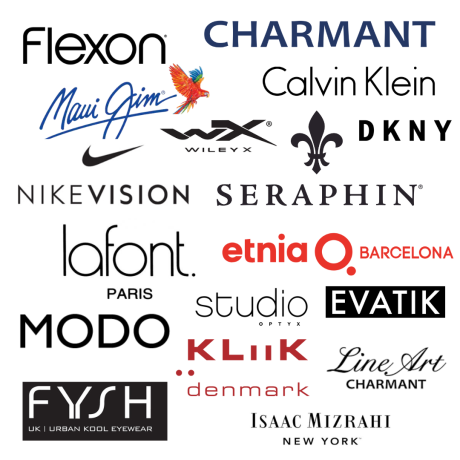
Browse our Frame Gallery to see more of these amazing brands.
Virtually try on frames with your phone or tablet.
Create your Wish List before your visit and we’ll have them ready for you when you arrive.